
Start Your Puppy Off on the Right Paw
Congratulations on your new family member!
Puppies bring a ton of joy, love, and maybe a chewed slipper or two. Here at Bradford Pet Hospital, we want to help you get your pup off on the right paw with a personalized healthcare plan and essential puppyhood guidance. This comprehensive guide will walk you through everything you need to know to raise a happy, healthy, and well-behaved pup.
Puppy basics 101: guide to your first year
Preventive Care Recommendations
Just like human babies, puppies need regular checkups to monitor their growth and development. These visits allow us to detect potential health problems early on, when they’re often easier and less expensive to treat. Puppies also require a series of vaccines during their first few months of life to protect them from serious diseases like parvovirus, distemper, and rabies. Regular vet visits ensure your puppy stays on track with their vaccinations and receives any necessary boosters!
Vaccinations: Puppies need a series of vaccines starting around 6 weeks of age. They’ll get boosters every few weeks until they’re at least 16 weeks old. Recommended vaccinations:
- Rabies (required by law)
- Distemper/Parvo (DHPP) (3+ boosters)
- Leptospirosis (2 boosters)
- Oral Bordetella
- Influenza (optional, for high-socialization environments)
- Lyme (optional, for pets traveling or hunting in areas with high tick population)
Fecal Testing: Intestinal parasites, tiny organisms that can live in your puppy’s gut, can be passed on from their mother. A simple test analyzing your pup’s stool can detect these. Please bring a fresh stool sample (within 24 hours) to your puppy’s first visit!
Microchipping: This tiny chip helps reunite you with your pup if they get lost. Implantation is free during spay or neuter.
Spaying/Neutering: Spaying or neutering around 6 months offers many health benefits for your pet, like reduced cancer risk and calmer behavior.
Remember: This serves as a general guideline. During your puppy’s first visit, the veterinarian will work with you to create a personalized wellness plan tailored to your pup’s specific needs.
Socializing
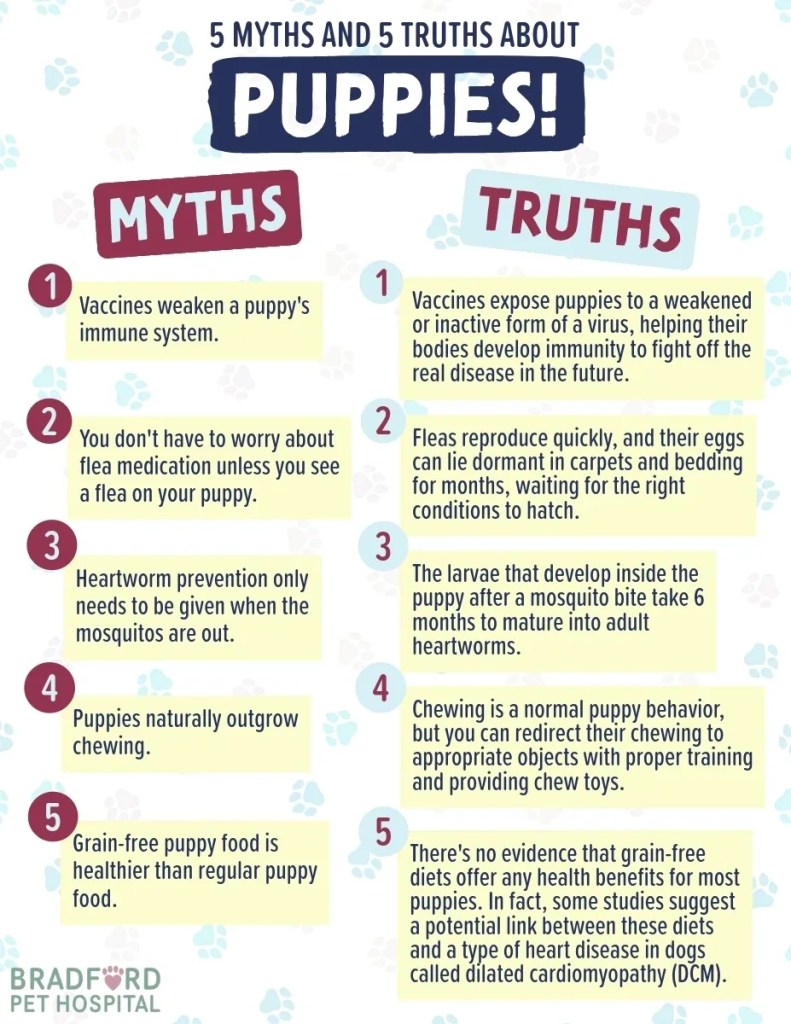
Pups are like little sponges, eagerly absorbing everything in their environment during a critical window called the socialization period. This crucial time, typically between 3-16 weeks of age, is when they’re most receptive to forming positive associations with new experiences.
Think of it as building a library of positive experiences for your furry friend. By introducing them to a variety of sights, sounds, smells, people, and animals in a controlled and positive way, you’re helping them develop the confidence to navigate the world with ease.
Imagine your pup encountering a bustling city street for the first time. If they haven’t been socialized to loud noises and unfamiliar faces, the experience could be overwhelming. But, if they’ve had positive encounters with similar stimuli, they’re more likely to approach it with curiosity instead of fear.
So, make socialization a fun adventure! Let your pup explore new environments at their own pace, offering treats and praise along the way. Positive reinforcement builds happy memories and helps your pup become a well-adjusted adult dog.
Housetraining
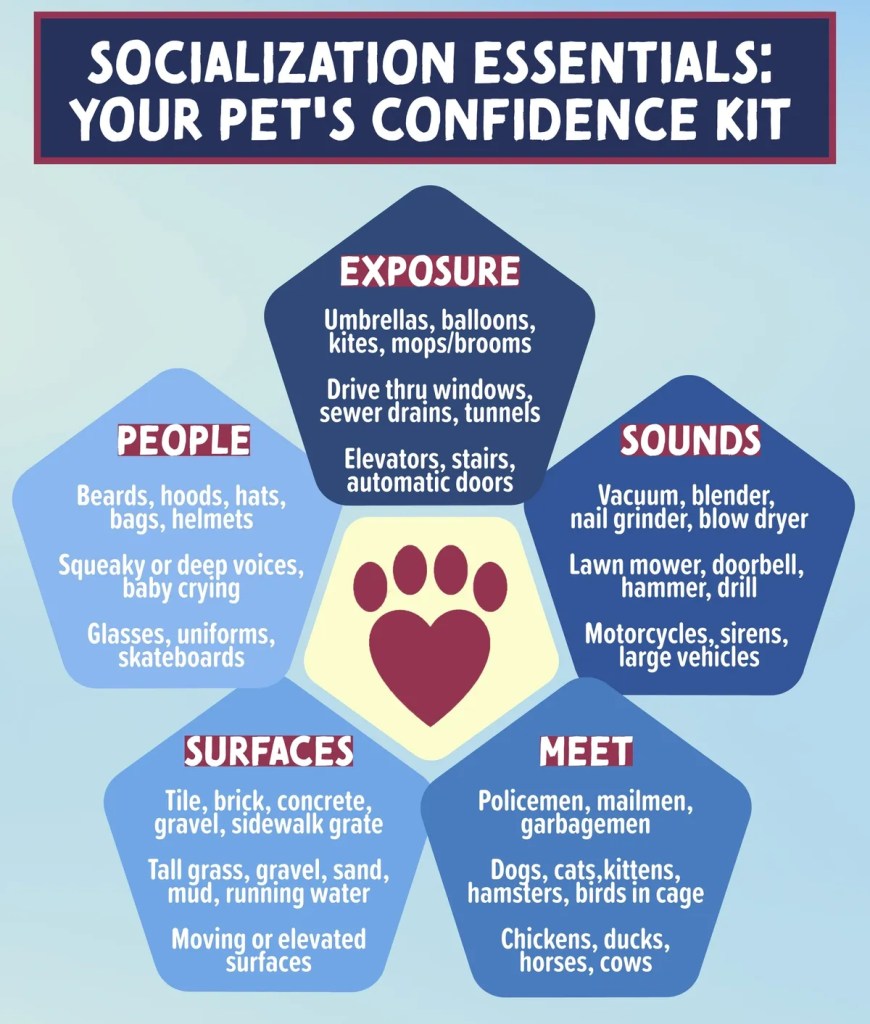
Housetraining requires vigilance! Since playtime can trigger potty breaks, don’t be afraid to take your pup outside to eliminate even mid-session.
Most dogs need to urinate twice! They may get distracted by sights and smells forgetting to fully empty their bladder.
- If you suspect incomplete elimination, bring your dog back inside and crate them for 5-10 minutes. Then take them out again on a leash, focusing on elimination before play.
- On walks, use a leash to prevent play until your dog relieves themselves completely.
- Learn your puppy’s potty cues – not all pups will whine at the door. Watch for sniffing, circling, or stopping play abruptly – these are all nature’s signals!
Remember, out of sight can mean into trouble during this process. Crate your dog whenever you can’t directly supervise them, limiting their free roam of the house.
Crates are your (and your dog’s) friend. Dogs naturally avoid soiling their den, so a properly sized crate (just big enough to turn around and stand up in) can become a potty-training haven.
Biting, Chewing & Enrichment
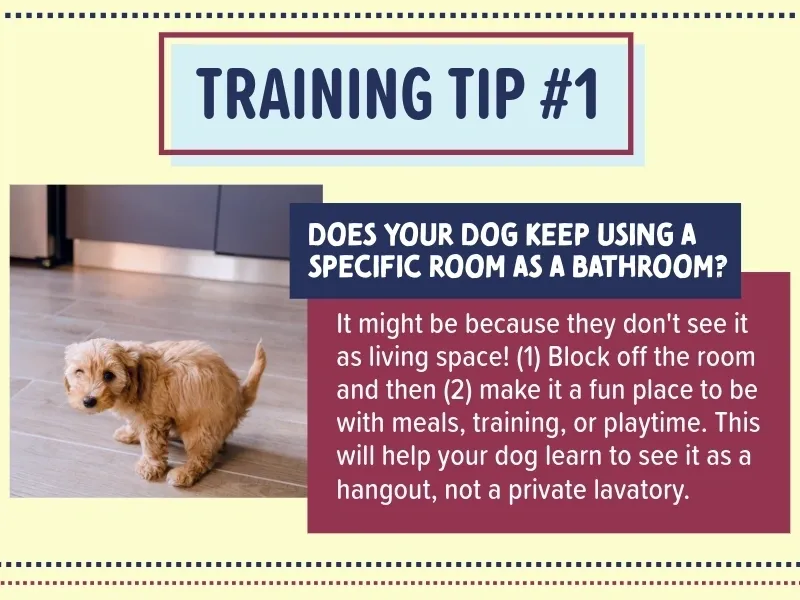
Pups explore the world with their mouths. Play biting can be frustrating, but it is a common behavior and almost never true aggression in puppies.
Resist the urge to yell or swat them, as this can frighten them. Instead, try a firm “Ouch!” Then, grab a chew toy and encourage your puppy to sit. Once they’re sitting calmly, offer the toy as a reward. This teaches them that gentle play earns them fun toys, not biting.
Puppies have bursts of energy, typically in the morning and at night, so plan for hands-off play like fetch during these times.
Enrichment is key! Provide a variety of chew toys like Kongs, bully sticks, and food puzzles to keep them occupied. A dedicated toy box helps them learn where their toys live.
Remember, a tired puppy is a well-behaved puppy! More playtime and exercise means less energy for destructive chewing.

Basic Commands
Teaching your pup basic commands like sit and down is easy!
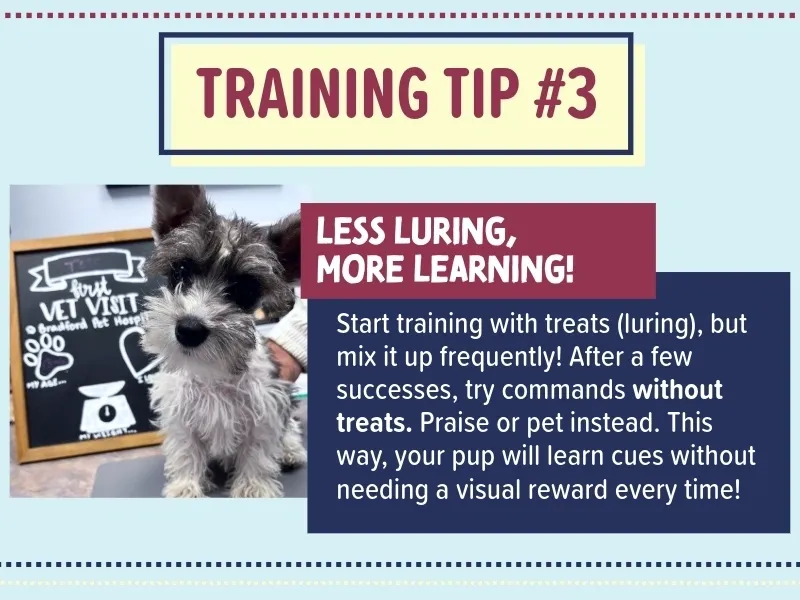
SIT: Hold a tasty treat near their nose, then slowly move it over their head and back. Their natural instinct will be to follow, lowering their rear into a sit. When they do, praise them with the treat and a happy “Sit!”
DOWN: Repeat for “down” by holding the treat near their nose, then slowly run it straight down towards the floor. As they follow, lowering their body, say “Down” and reward them with the treat when they’re fully lying down.
Keep training sessions short and positive, and your pup will be a pro in no time!
Crucial Commands
JUMPING: While jumping might seem adorable in a tiny puppy, it’s not a behavior you want to encourage. Reward it today, expect it tomorrow. Both you and guests should ignore greetings with jumps and only offer affection when all four paws are on the ground. This teaches them that calm greetings earn rewards.
RECALL: Coming when called, however, is a crucial skill you want your pup to master throughout their life. It strengthens your bond and keeps them safe. Take advantage of their natural desire to be close to you! Use a handful of your pup’s kibble as a “reward dispenser” as you practice throughout the day. Make training part of the fun, by sometimes calling them for no other reason than to reward. Gradually increase the distance and practice in low-distraction areas first.

Your House Rules
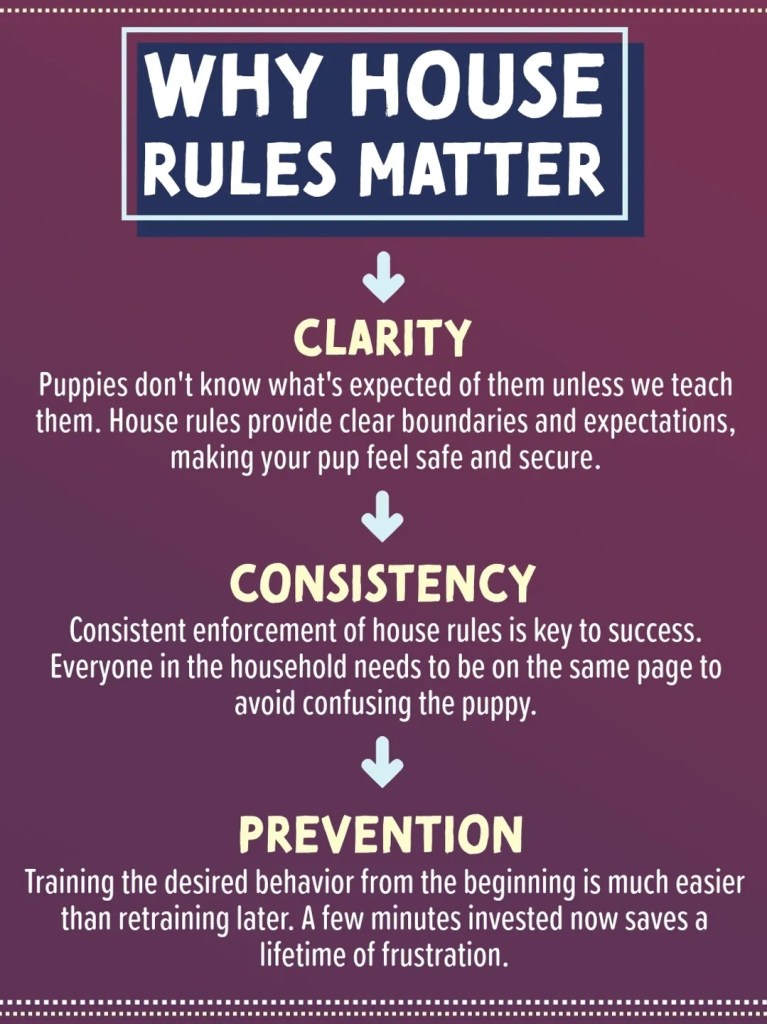
One of the most important things you can do for your new puppy is establish clear house rules from the very beginning. Puppies are constantly learning, and every interaction you have with them is an opportunity to train them. By setting clear expectations and rewarding good behavior, you’ll be setting your pup up for success.
What are your house rules?
- FURNITURE: Will your pup be allowed on furniture? If so, teach them to ask permission first (e.g., sit and wait for an invitation). If not, consistently block access and ignore attempts to jump up.
- DOORWAYS: Teach your pup to wait patiently at doorways by sitting and staying calm before being allowed to go through.
- BASIC COMMANDS: Incorporate basic commands like “sit” and “down” into everyday interactions. For example, have your pup sit before receiving food, toys, or pets.
- “LEAVE IT”: Instead of chasing your pup when they grab something off-limits, teach them “leave it.” Reward them for leaving the unwanted item and redirect them to an appropriate toy. This teaches them what’s acceptable to chew on.
Remember:
- Positive Reinforcement: Reward good behavior with treats, praise, or play.
- Patience: Puppy training takes time and patience. Be consistent and celebrate even small victories.
- Management: Set your pup up for success by providing them with plenty of appropriate chew toys and keeping temptations out of reach.
Starting Your Puppy Off Right
Puppies need this series of vaccines because maternal antibodies gradually wear off. Completing the full series ensures your puppy develops strong, lasting immunity.
Puppy Vaccination Timeline:
First DHPP, Bordetella
Second DHPP, begin Leptospirosis series
Third DHPP, complete Leptospirosis series
Rabies (timing based on Kansas regulations)
Maintaining Lifelong Protection
Regular boosters maintain your dog’s immunity throughout their life. We’ll send reminders when vaccines are due.
Adult Dog Vaccine Schedule:
Every 1-3 years per Kansas state requirements
Every year after initial series
Annually (or every 6 months if required by your boarding facility)
Every year after initial series
Annually as recommended
Vaccine Safety: What to Expect
We use only thoroughly tested, proven safe, and effective vaccines. The vast majority of pets tolerate them perfectly well, with no side effects. If your pet does have a reaction, symptoms are usually minor and temporary, resolving on their own within 24 to 48 hours. However, in the rare event that you suspect a severe allergic reaction, contact us immediately.
Normal Side Effects May Include:
- Mild lethargy
- Mild soreness at injection site
- Temporarily decreased appetite
- Low-grade fever
Seek Immediate Care If You Notice:
- Hives
- Facial swelling
- Difficulty breathing
- Persistent vomiting
- Severe lethargy or collapse